
Businesses in Nepal are increasingly using digital platforms to reach customers, promote their products, and build their brands. However, simply creating a Facebook page, posting product photos, or running occasional advertisements is not always enough to build a strong online presence. Customers want useful information before making purchasing decisions.
This is where content marketing becomes important. It helps businesses attract potential customers by sharing relevant information, answering questions, and demonstrating their expertise. Whether you operate a small clothing store in Kathmandu, an education consultancy in Pokhara, or a trekking company, a well-planned content marketing strategy can support your long-term business growth.
Table of Contents
What Is Content Marketing?
Content marketing is the process of creating and sharing valuable, relevant information to attract a specific audience, build trust, and encourage profitable customer actions.
Instead of directly asking people to buy something, businesses provide information that helps potential customers understand their needs and make better decisions. This content can include blog posts, social media updates, videos, guides, email newsletters, and customer stories.
The process generally involves four activities: understanding your audience, creating useful content, publishing it through suitable channels, and measuring its performance.
For example, a trekking company in Nepal can publish a blog explaining the best time to visit the Annapurna region, what to pack for a trek, and how much preparation is required. People searching for this information may discover the company and eventually enquire about its trekking packages.
Unlike traditional advertising, which mainly promotes a product or service, content marketing focuses on providing value before asking for a purchase.
Why Is Content Marketing Important for Businesses in Nepal?
Content marketing helps Nepali businesses build a stronger online presence and establish relationships with potential customers. Its value goes beyond publishing regular social media posts.
Here are some important benefits:
To Builds brand awareness
Publishing useful and consistent content helps more people discover your business and understand what you offer.
To Builds customer trust
Educational articles, product demonstrations, reviews, and informative videos help customers understand your products or services before making a decision.
To Supports SEO and organic traffic
Search-focused blog posts can appear in Google Search when they answer relevant questions. This creates opportunities to attract visitors without paying for every click.
To Helps small businesses compete
A small business does not always need a large advertising budget to share useful information. Consistent, relevant content gives smaller brands opportunities to reach customers.
To Generates potential customers
Helpful content can guide people from discovering your business to visiting your website, sending a message, making an enquiry, or purchasing a product.
To Creates long-term value
A useful article or video can continue attracting attention after its original publication, provided it remains relevant and accessible.
For businesses in Nepal, content marketing can connect local knowledge with online visibility and help customers make more informed purchasing decisions.
Types of Content Marketing That Work in Nepal
Different businesses need different types of content. The right format depends on your audience, products, services, and marketing goals.
Blog Posts and SEO Content
Blog posts help businesses answer questions that potential customers search for on Google. For example, an education consultancy can publish guides about studying abroad, admission requirements, scholarship opportunities, and application preparation.
Well-researched articles can attract organic traffic and establish your website as a useful information source.
If you need SEO/GEO realated services, you can contact me.
Social Media Content
Platforms such as Facebook, Instagram and even tiktok allow businesses to share product updates, educational posts, customer experiences, and promotional information.
A local clothing store, for example, can publish styling tips, new collection announcements, and product demonstrations to engage potential customers.
Video Marketing and Short-Form Videos
Videos make it easier to demonstrate products, explain services, and share experiences. Businesses can create tutorials, behind-the-scenes videos, customer interviews, and educational clips.
YouTube, Facebook Reels, and Instagram Reels can support different video content strategies depending on the target audience.
Email Marketing and WhatsApp Business
Email newsletters help businesses share updates, educational information, offers, and useful resources with subscribers.
WhatsApp Business can support direct communication with interested customers, including answering questions, sharing product information, and providing service updates. These channels work best when communication is relevant and customers have agreed to receive it.
Customer Reviews, Testimonials, and Case Studies
Real customer feedback can help potential buyers understand other people’s experiences with a business.
Businesses can share genuine testimonials, customer stories, and documented case studies to demonstrate how their products or services solve particular problems.
How to Build an Effective Content Marketing Strategy in Nepal
A successful content marketing strategy starts with understanding your customers, not choosing a social media platform. Before creating content, businesses should identify what their audience needs and how useful information can support business goals.
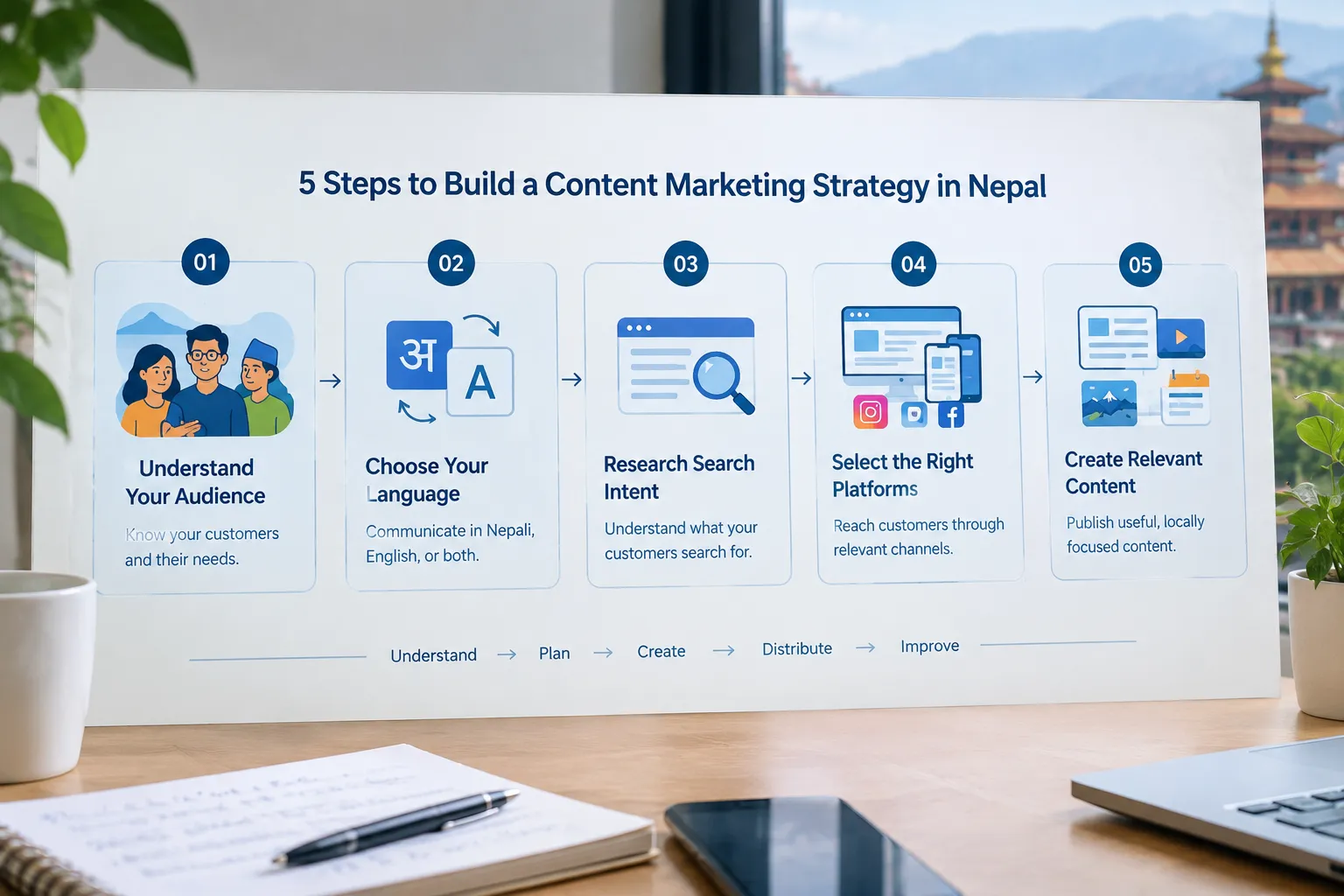
Understand Your Target Audience
Identify who your potential customers are, where they live, what problems they face, and what information they need before purchasing.
For example, the audience of a trekking company may include international travellers researching trekking routes, while a local restaurant may target people living or working nearby.
Understanding these differences helps you create content that matches real customer needs.
Choose Between Nepali and English Content
Language plays an important role in connecting with customers in Nepal.
Businesses targeting local audiences may benefit from creating content in Nepali, while companies serving international customers may need English content. Some businesses can use both languages to reach different customer groups.
The decision should depend on how your customers communicate and search for information. For example, a business may explain its services in English on its website while using Nepali captions on Facebook to connect with local customers.
Research Keywords and Search Intent
Keyword research helps you understand what people search for before choosing a product or service.
For example, someone searching for “best trekking agency in Nepal” may be comparing service providers, while someone searching for “Annapurna Circuit packing list” may be looking for practical information.
These searches have different intentions, so they require different content.
As an SEO consultant in Nepal, I consider search intent an important part of content planning. The goal is not simply to include keywords but to provide the information people actually need.
Select the Right Content Platforms
You do not need to publish everywhere. Choose platforms based on your audience and the type of content you create.
A business may use its website for detailed articles, Facebook for community engagement, Instagram for visual content, and YouTube for tutorials or demonstrations.
The website should remain an important destination because it gives you greater control over your published information and online brand presence.
Create Locally Relevant Content
Content becomes more useful when it reflects local interests, situations, and customer questions.
Businesses in Nepal can create seasonal guides, festival-related campaigns, local service information, and educational content around customer problems.
For example, a clothing store can prepare Dashain and Tihar shopping guides, while a travel company can publish information about trekking seasons and monsoon travel.
How to Start Content Marketing for Your Business: Step by Step
Getting started does not require a complicated marketing system. A clear plan and consistent execution are often more useful than publishing large amounts of content without direction.
Follow these seven steps:
Step 1: Set measurable business goals
Decide whether you want to increase brand awareness, website traffic, enquiries, online sales, or customer engagement.
Step 2: Identify your target customers
Understand their location, interests, problems, and purchasing behavior.
Step 3: Research topics and keywords
Find relevant questions and search terms related to your products or services. Consider both Google searches and questions customers frequently ask.
Step 4: Prepare a content calendar
Plan what you will publish, where you will publish it, and when it should go live.
Step 5: Create useful and original content
Focus on answering questions, explaining products, solving problems, and sharing relevant experiences.
Step 6: Publish and distribute content
Share content through your website, social media channels, email, and other relevant platforms.
Step 7: Measure and improve
Review performance regularly. Identify which topics attract the right audience and improve your future content based on the results.
Here is a simple example of a weekly content calendar for a clothing business in Nepal:
| Day | Content format | Topic |
|---|---|---|
| Sunday | Blog | How to Choose an Outfit for Dashain/Tihar |
| Monday | Facebook post | New collection announcement |
| Wednesday | Instagram Reel | Three ways to style an outfit |
| Friday | Customer story | Customer feedback and experience |
The purpose of a content calendar is to maintain direction and consistency, not to publish something every day regardless of quality.
Content Marketing Examples for Different Businesses in Nepal
Different industries can use content marketing in different ways.
- E-commerce and clothing stores: Publish product guides, styling tips, comparison articles, and festival shopping content to help customers choose products.
- Education consultancies: Create informative articles about studying abroad, application procedures, scholarships, and student preparation.
- Hotels and trekking companies: Publish destination guides, travel tips, trekking information, and seasonal travel recommendations.
- Restaurants and local service businesses: Share menus, service explanations, customer experiences, helpful tips, and information about their locations.
These are illustrative examples of how businesses can apply content marketing. The most effective approach depends on the actual audience and business objectives.
How to Measure Content Marketing Performance
Publishing content is only one part of content marketing. Businesses also need to understand whether their efforts are producing meaningful results.
Some useful performance indicators include:
- Organic traffic: The number of visitors arriving through unpaid search results.
- Keyword rankings: How your website performs for relevant search terms.
- Social media engagement: Likes, comments, shares, and meaningful interactions.
- Website enquiries and leads: Contact form submissions, calls, messages, and service enquiries.
- Conversion rate: The percentage of visitors who complete a desired action.
Tools such as Google Search Console help website owners monitor search performance, while Google Analytics 4 provides insights into website traffic and user interactions.
Remember that success should be measured against your original business goals. More likes or website visits do not automatically mean more customers.
Common Content Marketing Mistakes Businesses Should Avoid
Many businesses struggle with content marketing because they focus on publishing without having a clear strategy.
Avoid these common mistakes:
- Publishing content without understanding your target audience.
- Creating promotional posts without providing useful information.
- Copying competitors instead of sharing original insights.
- Ignoring keyword research and search intent.
- Publishing inconsistently without a realistic content calendar.
- Measuring success only through likes and followers.
A better approach is to create relevant content, maintain a consistent publishing schedule, and evaluate whether it supports your business objectives.
Frequently Asked Questions About Content Marketing in Nepal
What is content marketing in simple words?
Content marketing means creating and sharing useful information to attract potential customers, build trust, and encourage them to choose your business.
How can content marketing help small businesses in Nepal?
It helps small businesses improve online visibility, explain their products or services, answer customer questions, and attract potential customers through websites and digital platforms.
Should Nepali businesses create content in Nepali or English?
It depends on the target audience. Nepali can help businesses communicate with local customers, while English may be suitable for international audiences. Businesses serving both groups can use a bilingual content strategy.
Which social media platform is best for content marketing in Nepal?
There is no single best platform for every business. Facebook, Instagram, TikTok, and YouTube serve different content formats and audiences. Choose platforms based on where your potential customers spend time and how they prefer to consume information.
How long does content marketing take to show results?
Results vary depending on the industry, competition, content quality, distribution, and consistency. Some social media content may generate early engagement, while SEO-focused articles can require more time to gain search visibility. Content marketing should be approached as an ongoing business investment rather than a guaranteed quick result.
Conclusion
Content marketing in Nepal gives businesses an opportunity to attract customers through useful information, build trust, and improve online visibility. Start by understanding your audience, creating relevant content, and measuring results. A consistent strategy supported by SEO can contribute to sustainable business growth.
Need Help Building a Content Strategy That Actually Gets Found?
Creating useful content is a good starting point, but making sure the right people discover it is equally important. Your content needs a clear strategy that connects audience needs, search intent, SEO, and business goals.
If you’re a business owner in Nepal looking to improve your online visibility, attract relevant visitors, and build a stronger presence across Google and AI-powered search, I’d be happy to help.
I’m Kamal Khanal, an SEO and GEO consultant, helping businesses build search-focused strategies that connect valuable content with long-term organic growth.
Let’s discuss how a better content and SEO strategy can support your business growth.